Monthly Archives: December 2010

Best of Mathematics and Multimedia 2010

Overall Favorites

  1. GeoGebra Page
  2. Posts List Page
  3. All for Free Page
  4. Introduction to GeoGebra
  5. Free Calculus Ebooks
  6. GeoGebra Tutorial 4 – Graphs and Sliders
  7. GeoGebra Tutorial 1 – Quadrilaterals & Midpoints
  8. GeoGebra Tutorial 13 – How to use Latex in GeoGebra
  9. How to use the summation symbol
  10. Tessellation: The Mathematics of Tiling
  11. GeoGebra Tutorial 8 – Tracing the Graphs of Trigonometric Functions
  12. Geometer’s Sketchpad Tutorial 1: Constructing an Equilateral Triangle
  13. GeoGebra Tutorial 7 – Sliders and Rotation
  14. Free Algebra Ebooks
  15. GeoGebra Tutorial 2 – Constructing an Equilateral Triangle
  16. GeoGebra Tutorial 11 – Sliders and Graphs of Trigonometric Functions
  17. An extensive explanation about the Epsilon-Delta definition of limits
  18. GeoGebra Tutorial 32 – Graphing Piecewise Functions
  19. The Algebraic and Geometric Proofs of Pythagorean Theorem
  20. GeoGebra Tutorial 9 – Vector and Translation Continue reading

Mathematics and Multimedia Carnival #6

Happy New Year everyone.  The Mathematics and Multimedia Carnival #6 has been posted at Great Maths Teaching Ideas.
The next edition, the Math and Multimedia Carnival #7,  will be hosted by Keeping Mathematics Simple on  and will be posted on January 31, 2011.  To submit blog to the seventh edition, click here.

You may also want to read the following posts:

Wanted: Carnival Hosts

If you are a blogger and you want to host the carnival, you are most welcome. Just contact me at mathandmultimedia@gmail.com.  Hosting a carnival is likely to boost blog traffic.
Photo Credit:  pshutterburg
Introduction to Similarity

In layman’s language, we say that two objects are similar if, in some way, they share certain characteristics. For example, we can say that two flowers are similar if they have the same number of petals and they have the same color, although, they might be different flowers.

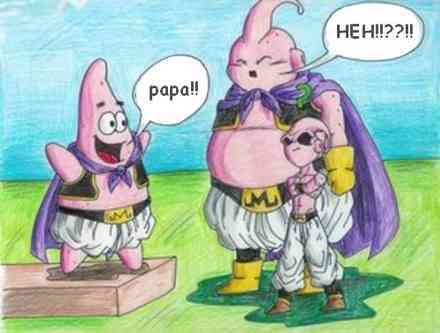
Are Buu and Patrick similar?

Mathematically, similarity is quite different. In mathematics, we say that two objects are similar if they have “the same shape, but not necessarily have the same size.”

Now what does that exactly mean?

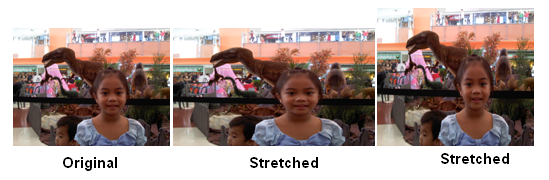
Similarity is an enlargement or reduction of objects.  A picture, for instance, may be enlarged or reduced in two ways. One way is stretching/shrinking it in proportion, and the other stretching/shrinking it horizontally or vertically.  When we say enlargement/reduction by proportion, we mean that if we want to increase/decrease the length by any percentage, we also increase/decrease the width by a similar percentage.

We can easily see that enlargement/reduction of pictures not in disproportion as shown below gives us a somewhat stretched picture. The second and the third picture in the first figure below are stretched horizontally and vertically, respectively.

This means that if we want to preserve the appearance of our picture, we must enlarge or reduce it in proportion.  The second figure is the proportional enlargement of the original photo.

In mathematics, we can only say that two objects are similar if their measurements are proportional. Continue reading

Related Posts Plugin for WordPress, Blogger...